Feeds:
Posts
Comments

Rhythmic Life

Rythmic Forms

The very inception of life is rhythm.

Life is rhythm and Rhythm is life.

The rising of the SUN is rhythm.

The shimmering of the RAYS is rhythm.

The BLOOMMING of a BUD is rhythm.

The Feel of the BREEZE is rhythm.

The ROAR of the WAVES is rhythm.

The Chirping of the BIRDS is rhythm.

The BUZZING of the BEES is rhythm.

The Voice in a SONG is rhythm.

The TINKLE on the FEET is rhythm.

The BREATH we take is rhythm.

The Heart that BEATS is rhythm.

From: http://www.kathakindia.org/?page=rythems

Image from: http://www.thenewyorkoptimist.com/sitebuilder/images/bs01_Rythmic_Forms_textile_detail_2005-600×450.jpg

Flowers of a given species all produce nectar at about the same time each day, as this increases the chances of cross-pollination. The trick works because pollinators, which in most cases means the honeybee, concentrate foraging on a particular species into a narrow time-window. In effect the honeybee has a daily diary that can include as many as nine appointments — say, 10:00 a.m., lilac; 11:30 a.m., peonies; and so on. The bees’ time-keeping is accurate to about 20 minutes.

Honey bee nectaring on button willow

Honey bee nectaring on button willow (from NY Times article cited below)

The bee can do this because, like the plants and just about every living creature, it has a circadian clock that is reset daily to run in time with the solar cycle. The bee can effectively consult this clock and “check” off the given time and associate this with a particular event.

Honeybees really are nature’s little treasures. They are a centimeter or so long, their brains are tiny, and a small set of simple rules can explain the sophisticated social behavior that produces the coordinated activity of a hive. They live by sets of instructions that are familiar to computer programmers as subroutines – do this until the stop code, then into the next subroutine, and so on.

These humble little bees have an innate ability to work out the location of a food source from its position in relation to the sun. They do this even on cloudy days by reading the pattern of the polarization of the light, and pass this information to other bees. In the dark of the hive, they transpose the location of a food source in the horizontal plane through the famous “waggle” dance into communication in the vertical plane of the hive.

Honeybees can tell their sisters how far away the food is up to a distance of about 15 kilometers. For good measure, they can also allow for the fact that the sun moves relative to the hive by about 15 degrees an hour and correct for this when they pass on the information. In other words, they have their own built-in global positioning system and a language that enables them to refer to objects and events that are distant in space or time.

German scientists in the early part of the last century called this ability of bees to learn the time of day when flowers start secreting nectar and visit the flowers at appropriate times Zeitgedächtnis, or time-sense. But the species of flowers in bloom, say, this week, is likely to be replaced by a different species at a different location next week or the week after. The bee needs a flexible, dynamic appointments system that it continually updates, and it has evolved an impressive ability to learn colors, odors, shapes and routes, within a time frame, quickly and accurately.

More at: http://judson.blogs.nytimes.com/2009/04/28/guest-column-lets-hear-it-for-the-bees/?ref=opinion

Two Years On!

Two years ago last month this blog started.  I continue to be amazed at how many people visit the site.  This year has also been quite extraordinary – having caught about 8 swarms of bees.  We now have a total of nine colonies.  Quite an increase from single old Faith at the start of 2008!

The local government bee inspector rang me last week and asked to inspect my hives (for the second time this year) so he could take samples of bees from five of my hives.  Unfortunately I had to go to town that day, so I did not accompany him on the inspection.  But all was well.  Only Joy is Queenless.  The remaining eight hives are doing well – though there was not as much honey as I was hoping for as July was quite wet.

A little over a year ago I stopped working at the corporate grindstone and the last year has been interesting – with my attention being turned to smaller companies and more local initiatives with my new company, Objective Designers.  More at: www.objectivedesigners.com

Last year I was wondering why Tears of Ra, the Sun God (https://beelore.com/2007/08/24/tears-of-ra-the-sun-god) is the most popular page by far.  Someone told me that there is an American TV series called Stargate Atlantis where RA is one of the main characters.  Perhaps that is one of the reasons for the page’s popularity. Interested to know if anyone else has other theories.

My most favourite story was the one I posted in July (https://beelore.com/2009/07/21/a-gift-from-the-bees/).  I would love to have more stories like this to post.  Please do send me any stories from your past or ones you have heard of so they can be posted!

So what plans for beelore in the coming year?

I have finally started to write more on the Bylaugh story (https://beelore.com/category/bylaugh/)…..which is beginning to turning into a book about the practical and spiritual side of beekeeping as well as research the connection between the health of bees and the state of the planet.  I want this to be multi-media – perhaps eventually making a film or a series of videos.  I also want to use some of the material to create a course for beginners in beekeeping.  I think that there is so much about bees that can be taught alongside the basics side of practical beekeeping.  And this site will continue to collect that type of material.  So all contributions are welcome!

Bees and Drums

What do bees have with do with drums?

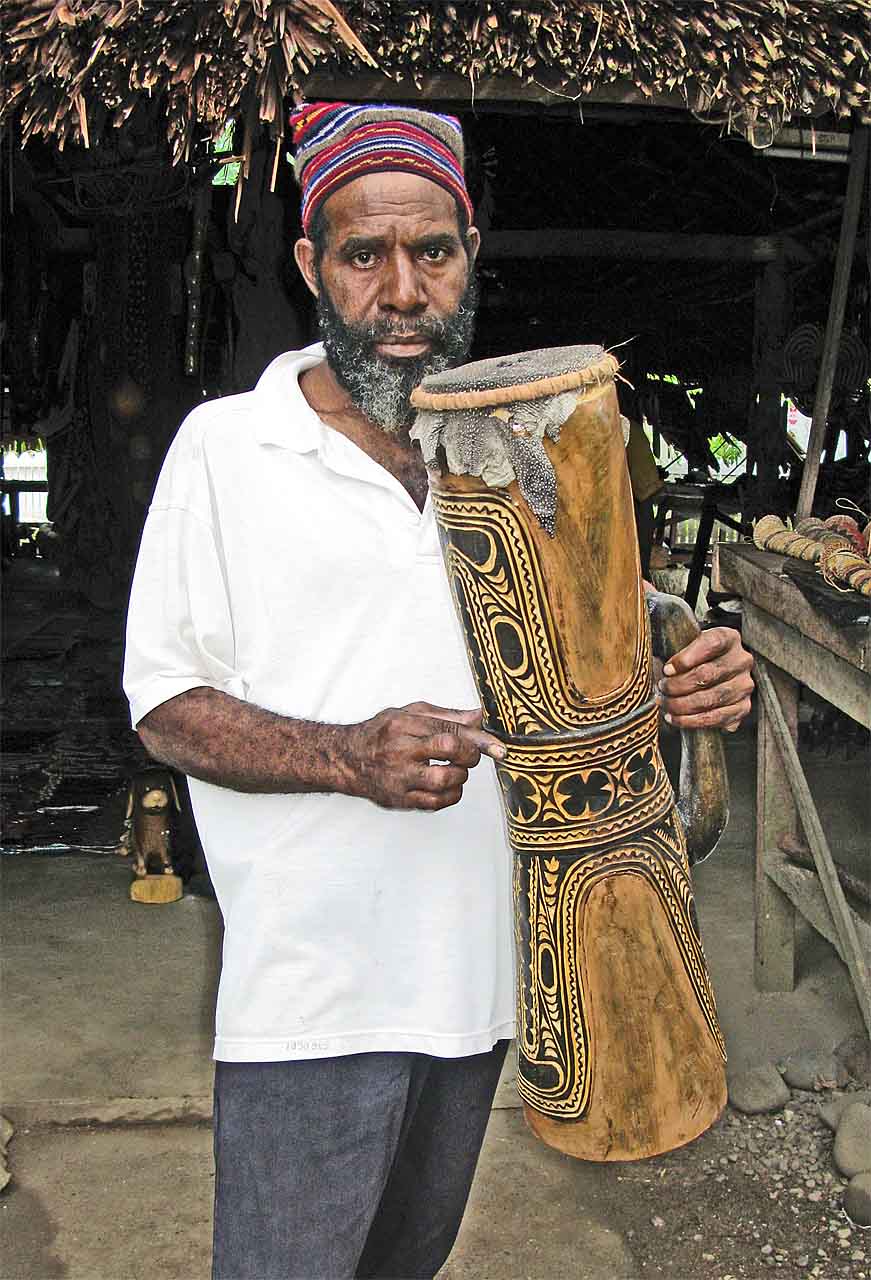
In the case of the kundu (pictured below), which is a traditional drum from Melanesia, bees play an important role in the construction of the drum.

A kundu

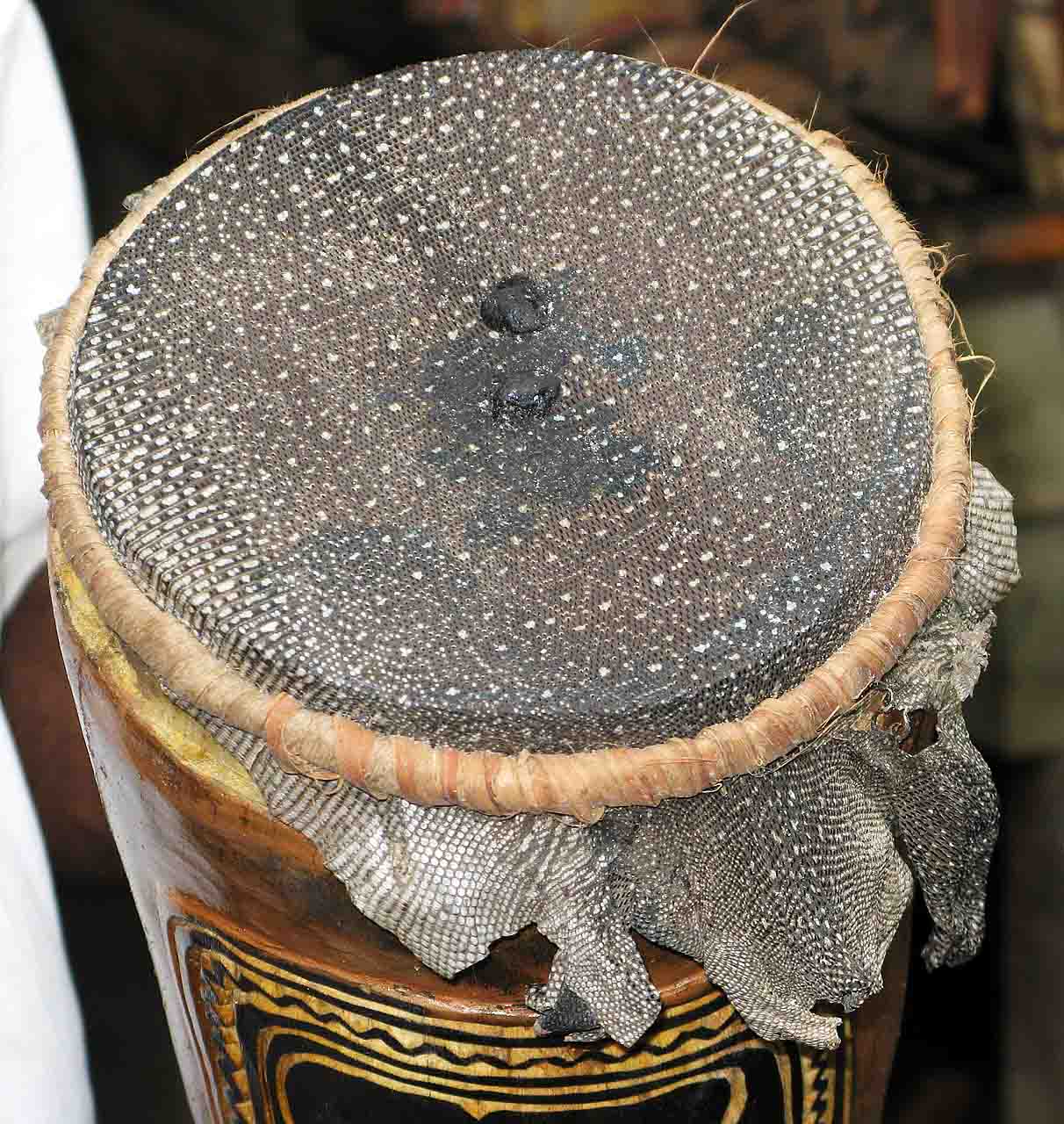
Here is a close-up picture of the head of the drum:

The head of a kundu drum

The head of the drum is made from lizard skin. Although this is unfortunate for the lizards, the skin is tough and durable.  It is held in place by the fibre ring that you can see surrounding the head of the drum.

Like all drums, the resonant frequency of the kundu is very important: it must sound just right to be in tune with other musicians that might want to play at the same time.  Most drums are tuned by adjusting the tightness of the drum head material with strings or clamps.  But with the kundu drum, they use something else.  If you have a look at the photo above,  you will find a clue.  And this is where the bees comes into the story:

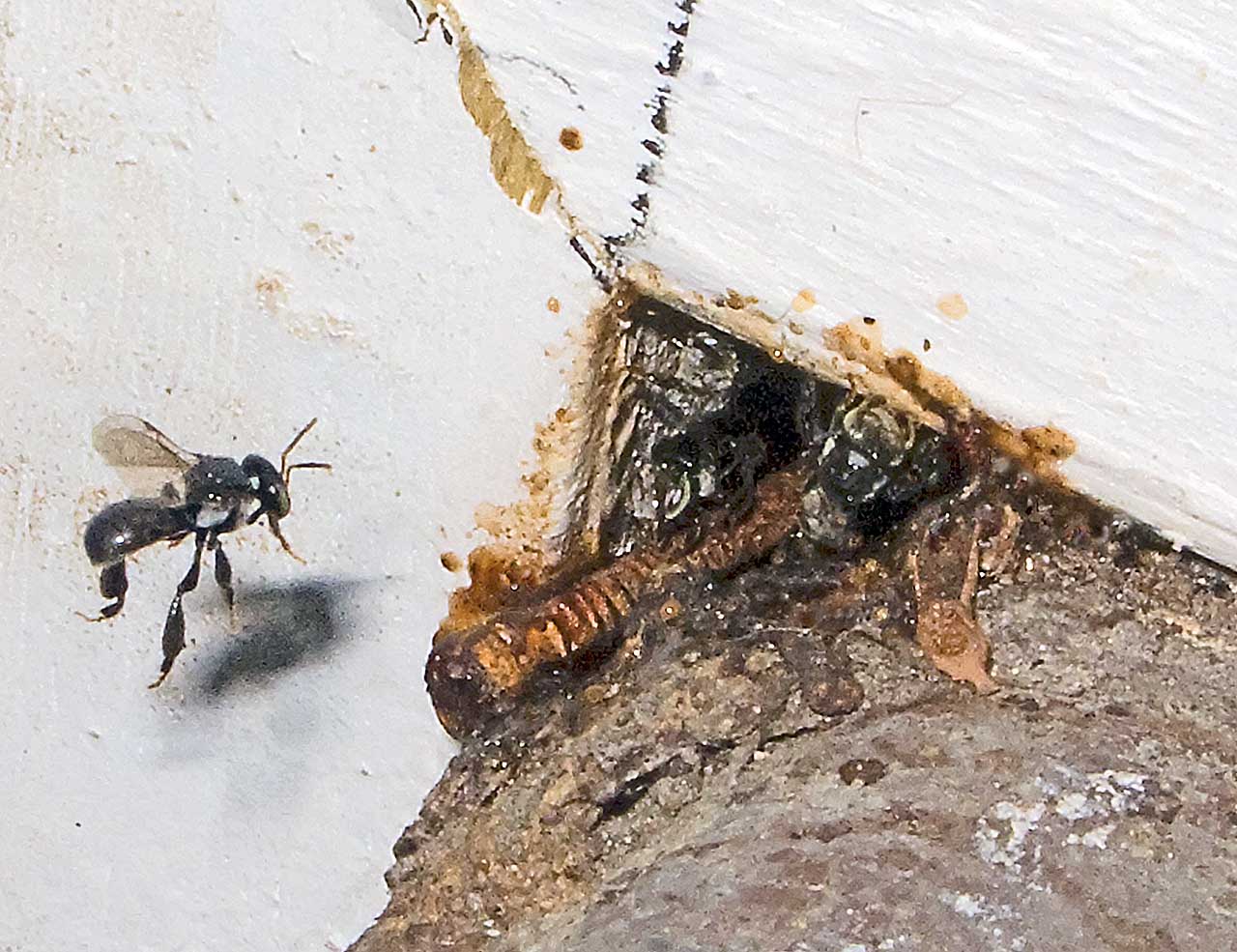
The bee that allows the kundu to be tuned

The drum-makers usually make dark little globs which they put on the drum skin from an incredibly sticky beeswax obtained from the hives of the little bee above. There are also other materials that are used for tuning.  (In fact the globs on the kundu above are not beeswax at all. They are made from some gooey substance derived from breadfruit – but it makes for a good story about bees!)

By adding mass to the head of the drum, the resonant frequency is lowered. You can adjust it only downwards by adding mass, so you have to start out by stretching the skin very tightly to get a frequency higher than you want. Then you add the mass of the beeswax a little at a time until it is just right.  If the frequency is too low, the drummer holds the head of the drum near the flames of the fire to tighten the head and raise the frequency.

Which is one way that bees are connected to drums!
Main idea and pictures from: http://www.messersmith.name/wordpress/2008/10/drums-and-bees/

Here is another interesting design – which has the same frame size for both the brood chamber AND the supers – the Rose Hive OSB (one-size box).  As well as having the same sized boxes for brood chamber and super, it also has no queen excluder!  The other advantage is that the roof and floors are National sizes – so for those with existing hives, many parts can be reused in the Rose OSB system without having to buy new rooves, floors or stands.

Graphic2c

I think this is a really neat idea.  It means that the queen is free to roam the whole hive and brood comb is not constrained.  And the problem of having not enough drawn comb for the brood chamber simply vanishes – because all drawn comb can be moved around depending on what the bees need – and there is no build-up of old black comb which can encourage varroa and wax moth.

rose hive

The only downside seems to be that the supers are more heavy than the conventional National / Commercial bee hive – but I tend to use a wheelbarrow when it is harvest time – which takes a lot of the back pain away.

Thornes (in the UK) are apparently selling the Rose Hive.  I am very interested in trying this new system – as well as having any comments that anyone has on how successful it has been for them – or any other observations they might have on it!

More at:  http://www.rosebeehives.com/index.php

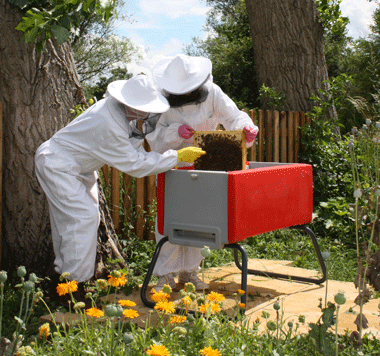
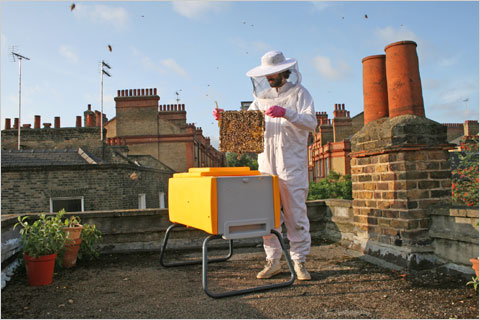
A friend of mine has just sent me an interesting link for a new type of hive.  It is based on the Dartington long hive – but is made of plastic.

ps_beehaus_buzzworks

Seems a good idea for beginner beekeepers or urban beekeepers (see below) – though I have not tried the system and cannot comment on how good it is.  My friend has a Dartington hive and says that it will have advantages over her current hive because the new plastic roof will weather better than the old design which is based on plywood.

10greeninc.bees

Interestingly enough, the number of beekeepers in my local area has increased by 100 to about 650 – and I am told that the number of new beekeepers in the county has increased more this year than for any other year since the 1940s!  This new design will surely attract more beekeepers in the UK.  I hope so!

More at:  http://www.omlet.co.uk/products_services/products_services.php?view=Bees

A Gift from the Bees

Thanks so much, Sylvia, for leaving such a beautiful story on the site:

Many years ago, there was an argument between my living-partner (and best friend) and a neighbour who owned the large orchard opposite us.  My friend, quite erroneously I believe, accused him of things he had not done. I could not sway the argument no matter what I did!

A bee came on to my hand one day.  It rested a moment, then vibrated its wings for take-off.  I asked it to help.  I asked the Bee Soul to help.  I knew it would happen.  I also asked for a ’sign’.

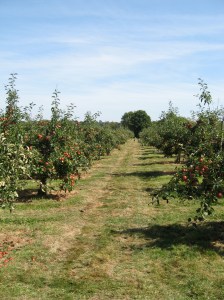
Avenue of Apple Trees in an Orchard

Avenue of Apple Trees in an Orchard

A few days later my friend came home and said he had made it up now with the orchard owner.  They had met in town and decided they were both too old and grey to be fighting like this about silly things.  My friend had been invited to tea there.  He came home an hour or so later.  He was smiling.  He told me the orchard owner had taken him to visit his hives (I did not know the man kept bees!)  He had given him a gift.  A pot of honey.  He had said: “Some of this honey must have been made from the flowers in your garden!”

The Afternoon of Life

I turned 50 last month and never posted anything.  I had a good party and caught a swarm of bees on the day!

I came across this piece by Carl Jung which somehow encourages me that there is still more to learn, uncover and grow towards in the “afternoon of life”:

“Wholly unprepared, we embark upon the second half of life . . . we take the step into the afternoon of life; worse still we take this step with the false assumption that our truths and ideals will serve as before. But we cannot live the afternoon of life according to the program of life’s morning — for what was great in the morning will be little at evening, and what in the morning was true will at evening have become a lie.”

The Bee in Heraldry

I have always been fascinated in Heraldry – ever since I was sent away to a boarding school in Windsor.  Every Sunday during termtime we had to go to the Chapel of St George in Windsor Castle to sit through two services – Mattins and Evensong.  I was not a chorister.  I was a “super” which, in Latin means “extra”.  A bit like a drone, really.  The only thing to look at in the Chapel were the shields and banners of the Knights of the Garter that hung on the walls.  Very romantic.  So many colours, patterns, symbols.  This combined with the beautiful singing had a very calming effect.  Even now, if I want to relax, I will listen to medieval choral music.

It is probably not so surprising that:

The bee is the most popular insect in Heraldry

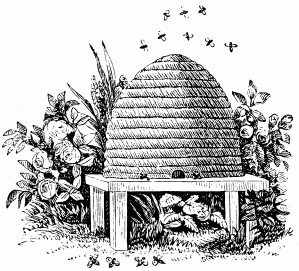
The bee is normally shown with an old-style beehive – as shown on the shield above.

More at: http://www.heraldryandcrests.com/heraldic_symbols.htm

The Beehive….is an emblem of industry, and recommends the practice of that virtue to all created beings, from the highest seraph in heaven to the lowest reptile of the dust.  It teaches us that, as we come into the world rational and intelligent beings, so we should ever be industrious ones; never sitting down contented while our fellow-creatures around us are in want, when it is in our power to relieve them without inconvenience to ourselves.

Masonic Beehive

When we take a survey of nature, we view man, in his infancy, more helpless and indigent than the brute creation; he lies languishing for days, months, and years, totally incapable of providing sustenance for himself, of guarding against the attack of the wild beasts of the forest, or sheltering himself from the in-clemencies of the weather.

It might have pleased the great Creator of heaven and earth to have made man independent of all other beings; but, as dependence is one of the strongest bonds of society, mankind were made dependent on each other for protection and security, as they thereby enjoy better opportunities of fulfilling the duties of reciprocal love and friendship.

Thus was man formed for social and active life, the noblest part of the work of God; and he that will so demean himself as not to be endeavouring to add to the common stock of knowledge and understanding, may be deemed a Drone In the Hive of Nature, a useless member of society, and unworthy of our protection as Masons.

More at:  www.philbrick2255.org.uk/books/broached_thurnell.pdf